Can You Add a Heat Pump Without Losing Your Furnace? The Hybrid Strategy
In the Greater Boston area, the conversation around home heating is shifting. Between rising energy costs, evolving Mass Save incentives, and the broader move toward electrification, many homeowners are asking whether a heat pump should be part of their future.
But what if you already have a working gas or oil furnace?
Does upgrading mean ripping everything out?
For many families we work with, the hesitation isn’t about technology. It’s about practicality. If the current system works, why replace it? And more importantly — how does this decision affect comfort, cost, and long-term home value?
At A1 Real Estate Solutions, we don’t look at HVAC equipment in isolation. We look at the home as a system — architectural design, insulation levels, electrical capacity, lifestyle needs, and long-term plans. The real question is not just “Can I add a heat pump?” but “What makes the most sense for this home and this family?”
Can You Install a Heat Pump Without Replacing Your Furnace?
The short answer is yes.
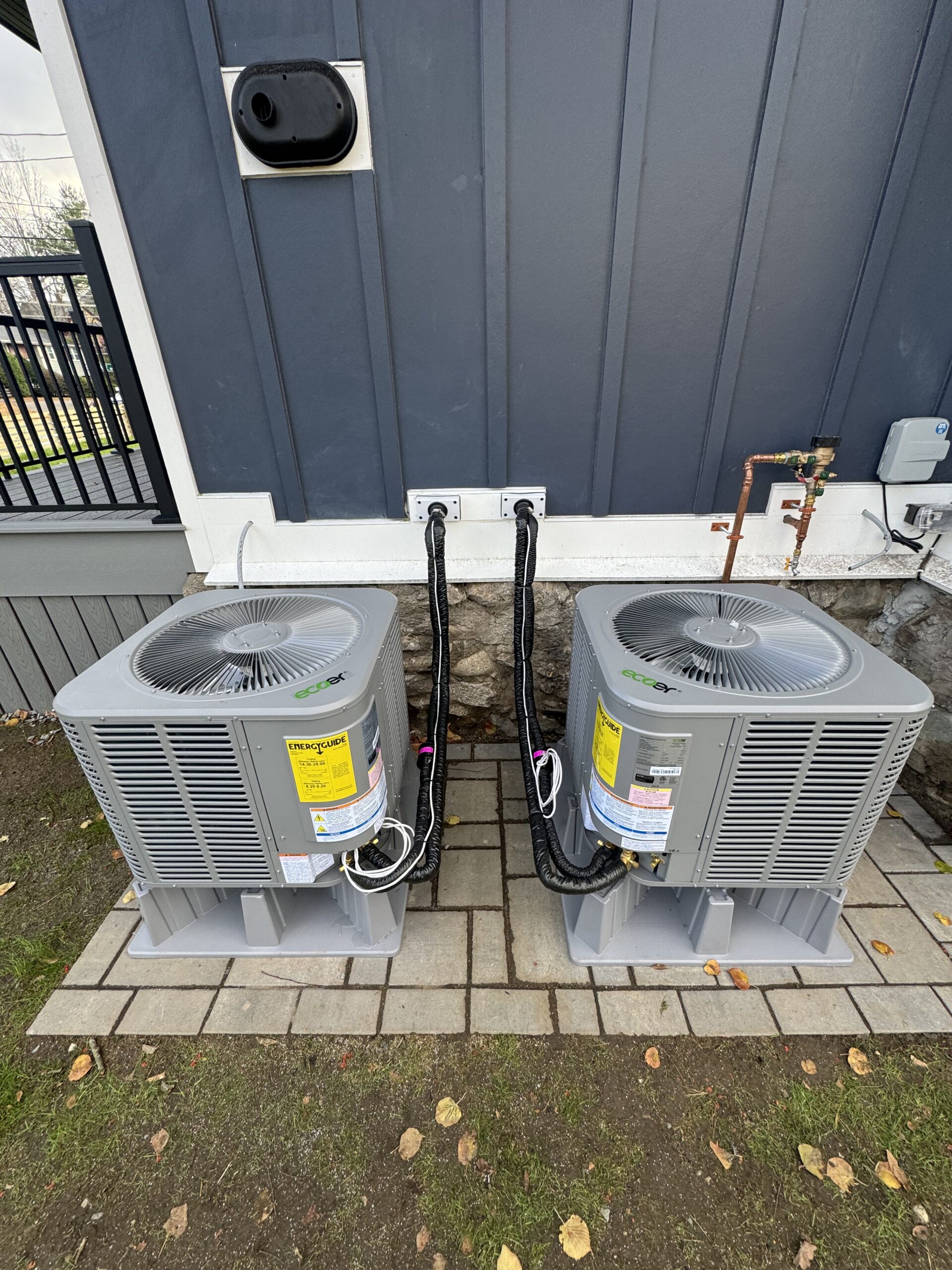
This approach is commonly called a Hybrid or Dual Fuel system. An air-source heat pump is integrated with your existing furnace. The heat pump handles cooling in the summer and heating during milder winter days. When outdoor temperatures drop below a set point, the furnace takes over.
Modern cold-climate heat pumps are far more capable than many people assume. They can extract usable heat from outdoor air even well below freezing. But furnaces — especially gas or oil — still deliver very high supply temperatures. That difference in heat delivery is part of why hybrid systems can feel like a balanced solution in New England.
In simple terms: one system prioritizes efficiency, the other prioritizes raw heat output when needed.
When a Hybrid Strategy Makes Sense
A hybrid approach can be a very intelligent transition strategy, especially in homes where:
The furnace still has useful life left.
If your system is 8–12 years old and well maintained, replacing it purely for electrification may not produce the best short-term ROI.
You want flexibility.
Energy markets change. Electricity rates fluctuate. Oil and gas prices fluctuate. A hybrid system allows you to respond strategically rather than being locked into a single energy source.
Your electrical service is limited.
Full electrification sometimes requires a 200-amp service upgrade. In certain remodels, we evaluate whether that investment makes sense now — or later.
You are entering electrification gradually.
For many families, this is not an all-or-nothing decision. It’s part of a longer plan that may include envelope upgrades, panel upgrades, solar, or future additions.
Hybrid systems allow homeowners to move forward without forcing every decision at once.
When It Doesn’t Make Sense
Pragmatism works both ways.
There are situations where keeping the old furnace creates more complexity than clarity.
If the furnace is 20+ years old, near end-of-life, or significantly oversized for the home, installing a second system may simply delay an inevitable full replacement.
If we are performing a deep renovation — new windows, significant insulation upgrades, air sealing — the heating load of the home may drop dramatically. In those cases, it often makes more sense to re-evaluate the entire mechanical strategy rather than stacking systems.
And in some scenarios, Massachusetts incentives for whole-home conversions meaningfully close the financial gap between partial and full electrification.
The right answer depends on timing, scope, and long-term plans.
What Most Homeowners Don’t Consider: The Envelope Integration
This is where Design-Build thinking becomes critical.
As engineers and design professionals, our role is to help homeowners make confident decisions before installation begins. It’s not only about execution — it’s about strategy. The “why” behind the system starts early in the design process, when we evaluate how architecture, envelope performance, energy goals, and lifestyle needs all connect.
- If walls are open during a remodel, that is the moment to improve air sealing.
- If an addition is being built, that is the moment to reconsider load calculations.
- If basement space is being reconfigured, that is the moment to evaluate equipment footprint.
A smaller heat pump in a well-sealed, properly insulated home will often outperform a larger system in a drafty one. Equipment should respond to the envelope — not compensate for it. That clarity is what prevents over-spending and under-performing.
Hybrid Systems Explained Simply
Think of a hybrid system like having two tools available for different conditions.
During moderate temperatures — which account for a large portion of the year — the heat pump operates very efficiently. In technical terms, it can deliver multiple units of heat for every unit of electricity consumed, especially in shoulder seasons.
During extreme cold snaps, when outdoor air contains less usable heat, the furnace provides higher temperature output. That higher supply temperature can feel more familiar to homeowners used to oil or gas systems.
The transition between systems is automatic and managed by controls. The homeowner simply experiences stable indoor comfort.
Comfort vs. Efficiency vs. Lifestyle
Efficiency matters. ROI matters. But families ultimately experience their homes through comfort and lifestyle.
Comfort is not just temperature. It is:
- Even room-to-room balance
- Reduced drafts
- Stable humidity levels
- Lower noise
- Improved indoor air quality
When we design remodels, we often hear things like:
“This room is always colder.”
“The second floor overheats.”
“The basement feels damp.”
These are not equipment problems alone. They are system problems.
Energy upgrades should make daily life better — not just utility bills lower.
And from a value perspective, buyers increasingly understand high-performance homes. Comfort, lower operating costs, and updated mechanical systems all contribute to long-term property value in Greater Boston’s market.
How We Approach This at A1RE
We do not begin with equipment catalogs. We begin with clarity. When working on a design-build project, we ask:
- How long does this family plan to stay in the home?
- Are we opening walls where envelope upgrades make sense?
- Is an addition changing the load profile?
- Does electrical capacity align with future plans?
- How does mechanical space affect design goals?
As engineers and design professionals, our role is to help homeowners make confident decisions before installation begins. It’s not only about execution — it’s about strategy. The “why” behind the system starts early in the design process, when we evaluate how architecture, envelope performance, energy goals, and lifestyle needs all connect..
When the dust settles on a remodel, we want the home to feel better, function better, and perform better — without unnecessary complexity.
The Bottom Line: Think in Systems, Not Equipment
Your home is the system. A furnace or a heat pump is just a component.
Installing a heat pump without replacing your furnace can be a smart move — when it aligns with your home’s condition, your remodel plans, your comfort expectations, and your financial goals.
The goal is clarity, not electrification for its own sake. When decisions are made with a full understanding of design, envelope performance, mechanical interaction, and lifestyle impact, the result is not just an upgrade — it is a better home.
Call us at 508-960-9603 or book a consultation today with our team. Let’s help you make a clear, confident decision for your home’s comfort and long-term performance.


